Project documents
Read and download the materials, reports and publications developed throughout the project.
Latest documents
 Behaviour Biodiversity researchWorkshop report
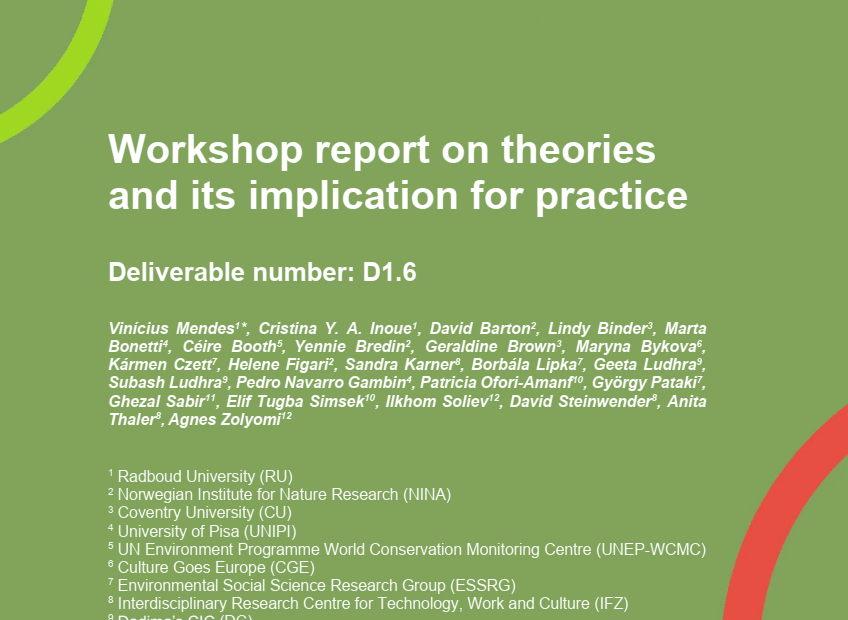
Workshop report on theories and its implication for practice
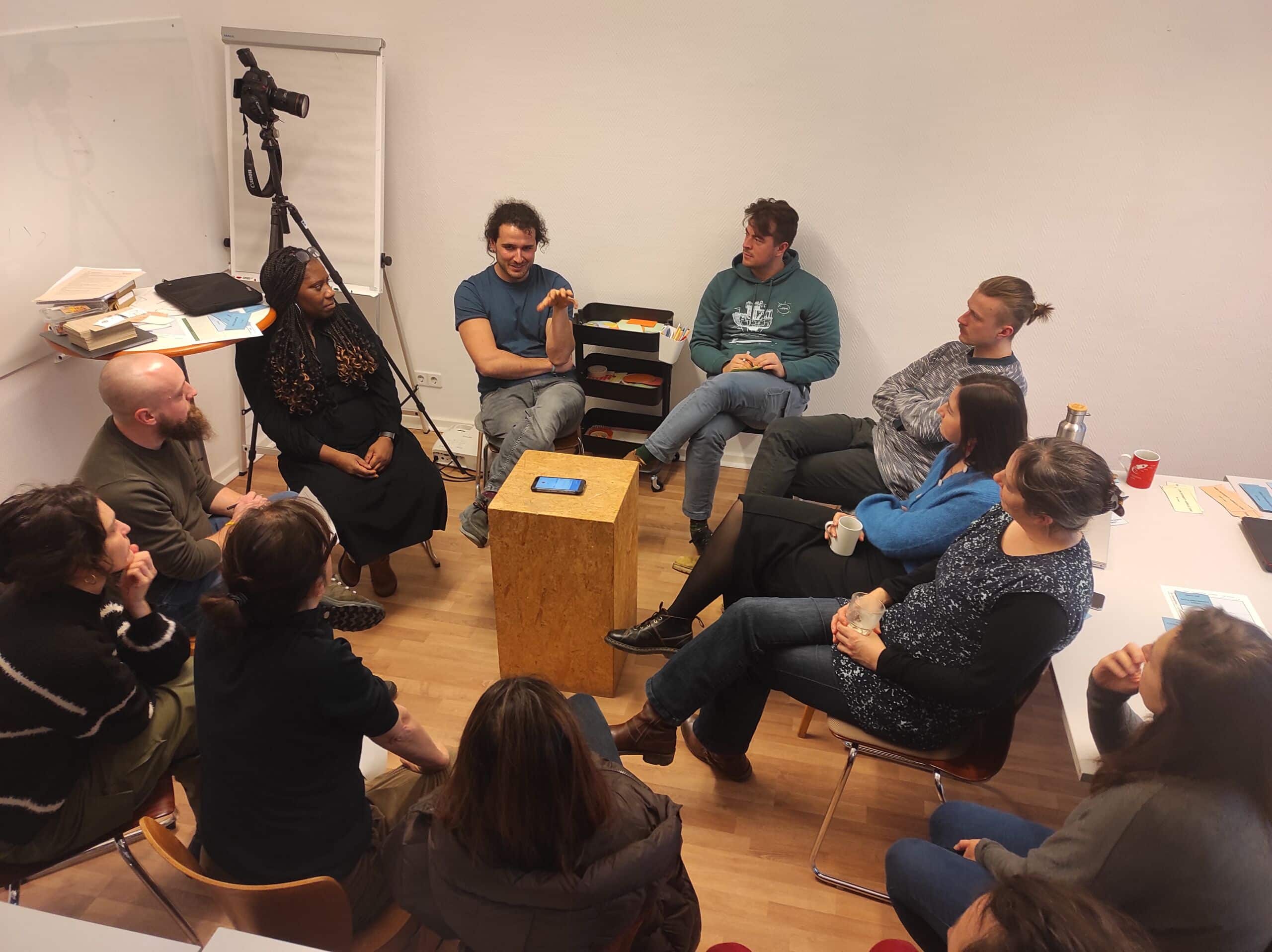
The aim of the joint working methodology is to understand each other's knowledge base, mindset and expectations, so that project partners (academics, practice partners and societal stakeholders) can work effectively on common research topics. To address this challenge, social science theories and methodologies applied in the project were debated in a workshop to explore their practical [...]
 Behaviour Biodiversity intersectionality researchResearch report
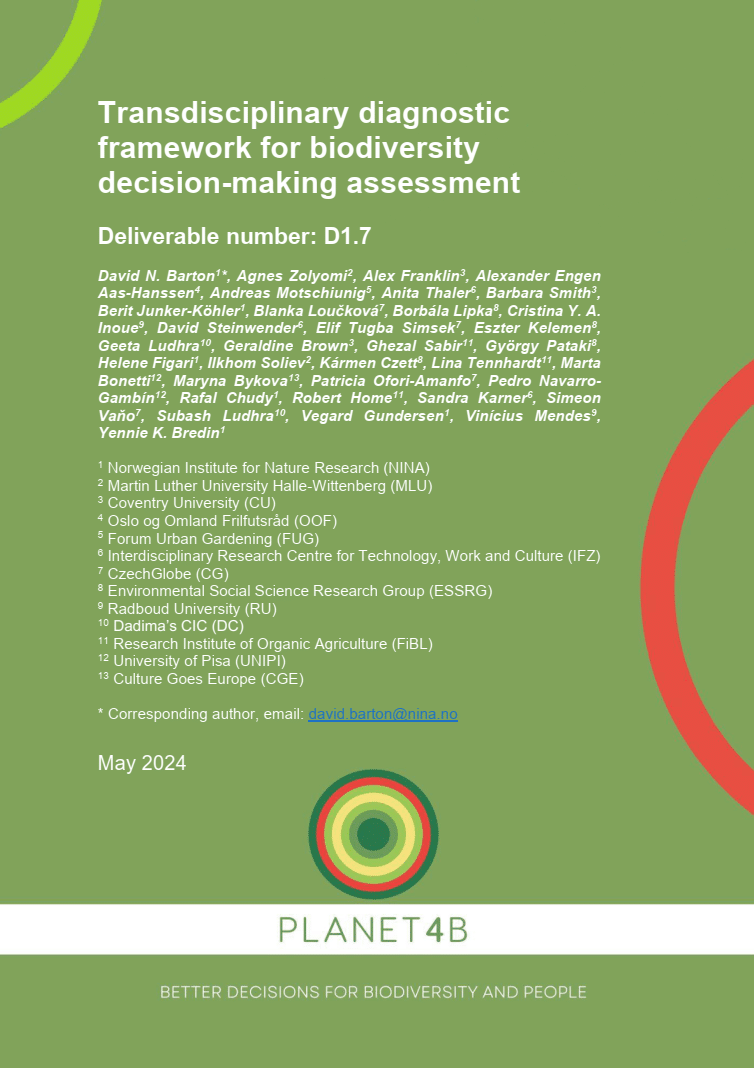
Transdisciplinary diagnostic framework for biodiversity decision-making assessment
This deliverable describes the process of developing a transdisciplinary diagnostic framework for biodiversity decision-making carried out in Work Package 1 of the EU funded research project PLANET4B. The aim of the process was to help researchers and practitioners in our project become more conscious of the theoretical approaches and languages that may condition the interventions [...]
 Behaviour Biodiversity brief intersectionalityResearch brief
Creative and experimental methods for boosting biodiversity prioritisation
Brief workshop report
One of PLANET4B's working hypotheses is that societies need transformative change to halt and reverse the alarming rates of biodiversity loss. To address this need, PLANET4B has been analysing, testing, developing and synthesising intervention methods that go beyond traditional approaches (e.g. laws and regulations, markets and incentives, information) and can be implemented within the project’s case [...]

All documents
 Project management document
The Data Management Plan (DMP) explains how the PLANET4B project will secure and manage data and how it complies with data management policies including the FAIR principles and the General Data Protection Regulation (GDPR). The updated version of the DMP was released in April 2024.
-
Behaviour Biodiversity brief intersectionalityResearch brief
Brief workshop report
One of PLANET4B's working hypotheses is that societies need transformative change to halt and reverse the alarming rates of biodiversity loss. To address this need, PLANET4B has been analysing, testing, developing and synthesising intervention methods that go beyond traditional approaches (e.g. laws and regulations, markets and incentives, information) and can be implemented within the project’s case studies. Read about the findings of our latest analysis training in brief.
 Behaviour Biodiversity intersectionalityWorkshop report
One of PLANET4B's working hypotheses is that societies need transformative change to halt and reverse the alarming rates of biodiversity loss. To address this need, PLANET4B has been working on analysing, testing, developing and synthesising intervention methods that go beyond traditional approaches (e.g., laws and regulations, markets and incentives, information) and can be implemented within the project’s case studies. To learn about the potential tools facilitating transformative change at various [...]
 Behaviour Biodiversity bResearch brief
How to design learning communities for knowledge co-creation in social research on biodiversity
Communities can provide ingenious answers aiming to influence decision making on biodiversity related questions. Engaging diverse community actors and stakeholders in a meaningful way is possible only if tailor-made approaches are used to contact and interact with them. Take a look at this process briefly and you'll surely be tempted to delve into the full report.
 Behaviour PolicyResearch brief
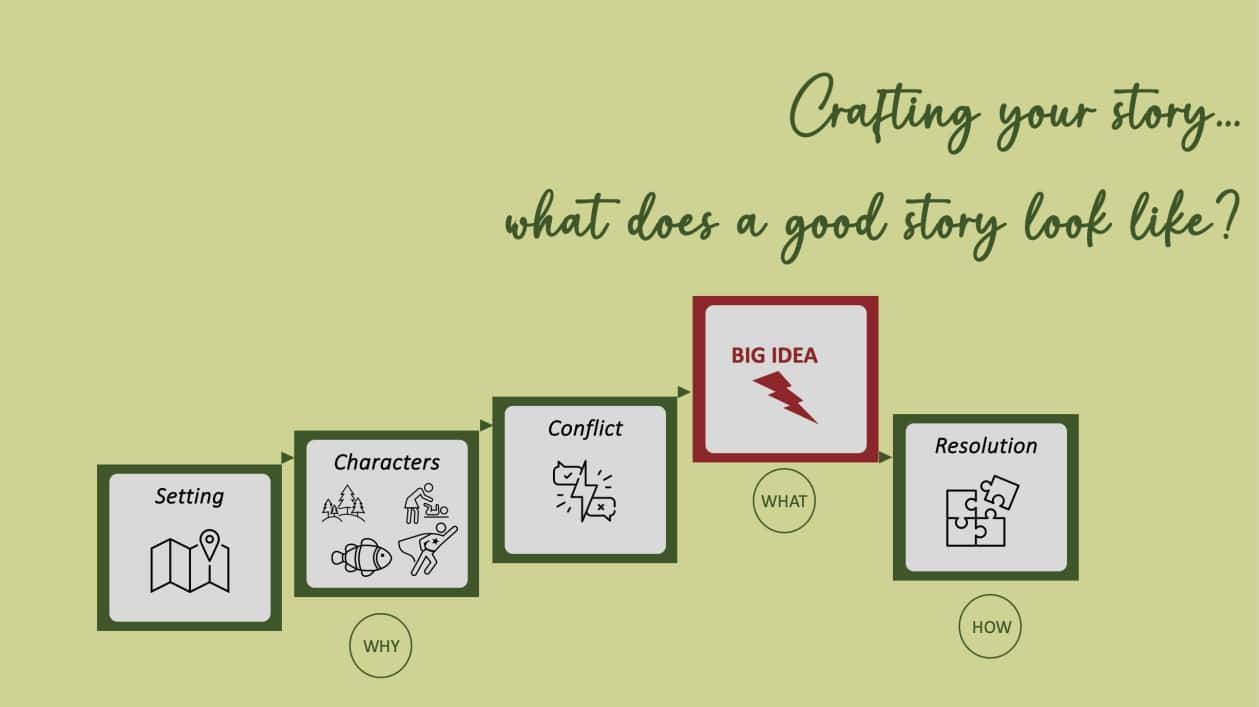
The PLANET4B partnership shares their experiences on storytelling methodology in a comprehensive report, with 11 envisaged case study stories of change, potential policy recommendations, theories of change, and leverage points.
 Behaviour intersectionality researchResearch report
“One key challenge is the deep level of engagement required by stakeholders (especially members of the Learning Communities). As no financial incentives are provided to participants, their motivation to get engaged depends mostly on how well the learning objectives align with their aspirations.” - highlights the lead researcher in the report of establishing Learning Communities and Advisory Boards. The local and virtual communities established in frame of PLANET4B project help [...]